Speaker, Trainer & Author on Neurodiversity
Turning difference into a lever.
My starting point
For a long time, I looked for meaning where relationships seemed to fall apart for no apparent reason. Not for lack of wanting connection, but because something in the way interactions were built kept escaping me.
For me, autism was less an answer than a starting point. A framework that allowed me to reread my own experience, and to observe closely the relational mechanics, the implicit expectations, the silent misunderstandings and the constant fatigue of adapting.
Today
Today, that understanding is what I bring to light. Not to explain autistic people to others, but to make visible the precise places where our relational frameworks create misunderstanding, distance or rupture.
This work is not a conclusion. It is a way of continuing to look for meaning, by opening spaces where connection can become possible again.
The problem
That invisible cost is not a deficit in people. It is a deficit in the framework.
Neurodiversity does not ask for awareness. It shows what happens when a work framework forces some people to mask how they function: fatigue, lost productivity, departures, and a manager left wondering what they missed.
What we first observe in autistic people — the gap between how they actually function and the expected framework — reveals a wider tension. Too many employees, neurodivergent or not, spend silent energy holding up an environment that does not state its expectations clearly. A missing framework does not penalise a minority: it exhausts everyone, slows collective productivity, and leaves managers treating symptoms without ever seeing the cause.
85-90%
of autistic people in France are unemployed, rarely for lack of skills.
Burnout
driven by daily masking: adjusting behaviour, decoding norms, performing in a framework not designed for you.
Turnover
linked to unspoken discomfort. The organisation loses skills without knowing why, and the manager is left powerless.
Less absenteeism. More connection. A team that holds.
Neurodiversity is not a separate HR topic. It is a lever to understand how your teams really work — and why some people burn out without anyone understanding why.
Build your formatManaging neurodivergence
Spot signals, adapt work frameworks, keep the talent the organisation risks losing without knowing it.
Retention & wellbeing
Reduce invisible fatigue and turnover linked to discomfort. When the framework becomes legible, people stay.
Team communication
Fewer misunderstandings, more clarity in exchanges. Simple rituals so everyone knows how to contribute.
Performance & innovation
Psychological safety is not an HR gadget: it is the condition for teams to take risks, propose and engage.
Three steps
A simple journey, designed around your context.
01
We take stock
We discuss your context, teams, friction points and what you want to see change.
02
The intervention
Keynote, training or tailored programme: the format is adjusted to your audience and objective.
03
The embedding
Concrete tools and a follow-up kit so managers can reuse these markers every day.
Case study
The future of HR, seen through neurodiversity
IGR-IAE Rennes — University of Rennes
Rebecca Dickason, senior lecturer at IGR-IAE Rennes — the management and HR school of the University of Rennes — runs the "HR Expert Track", a series of sessions for her HR students.
The starting question
How do you widen the horizon of future HR professionals beyond the processes taught in class? Rebecca was looking for an angle that could genuinely shift their view of the profession: not another awareness session, but a challenge to what HR systems actually measure.
My session
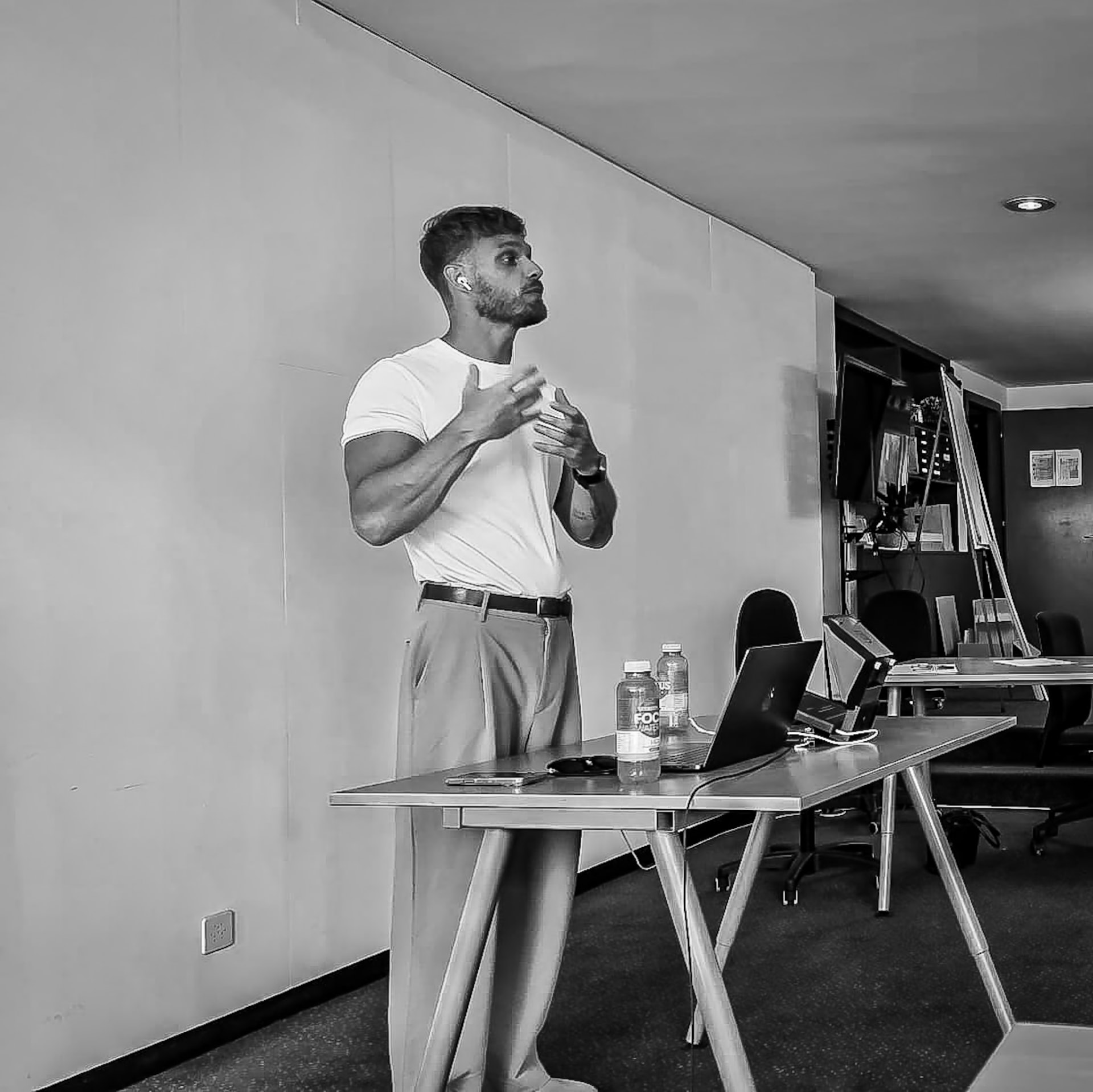
I led a conversation-driven conference on the future of HR seen through neurodiversity. Starting point: our hiring processes often assess how well someone decodes social norms rather than how well they can do the job. In France, 85 to 90% of autistic people are unemployed — rarely for lack of skills.
What students take away
- →Masking: constantly adapting behaviour to expectations, at a high cognitive and emotional cost.
- →Double empathy: not a lack of empathy, but a mismatch between two communication frameworks.
- →The role HR plays in what gets recognised, rewarded and normalised inside an organisation.
« Many thanks to Lucas Lenoir for a nuanced, insightful session that encouraged us to look more closely at the systems we design — and what they truly value. »
Participant feedback
86%
rated the conference 5/5
100%
would recommend running the session again
100%
found the content relevant to their HR studies
« Everything, from presentation to delivery to content to conclusion, was perfect. »
« Get into our minds to actually see how neurodiverse people work, which made me more empathetic and understanding. »
« He imbibed more knowledge on me with regards to Autism and how HR leaders can use their position to make a positive change in the workplace. »
Organise a session« Are our systems better at recognising social conformity, or at creating space for genuine cognitive diversity? »

Talks
These talks are for everyone who senses that something, in the way we communicate and live together, deserves to be rethought.
What I talk about
I speak about autism and neurodiversity as an entry point into universal human mechanics: communication, implicit norms, adaptation, relationships and social frameworks.
How I do it
I speak through open, accessible and embodied talks. I create spaces for shared reflection, with no jargon and no lecturing. My sessions blend lived experience, theoretical insight and perspective.
Why it matters
Because too much tension and conflict comes from misunderstanding rather than bad intention. As long as we do not create more space to understand how people function, the same people will keep paying the cost of adapting.
Book
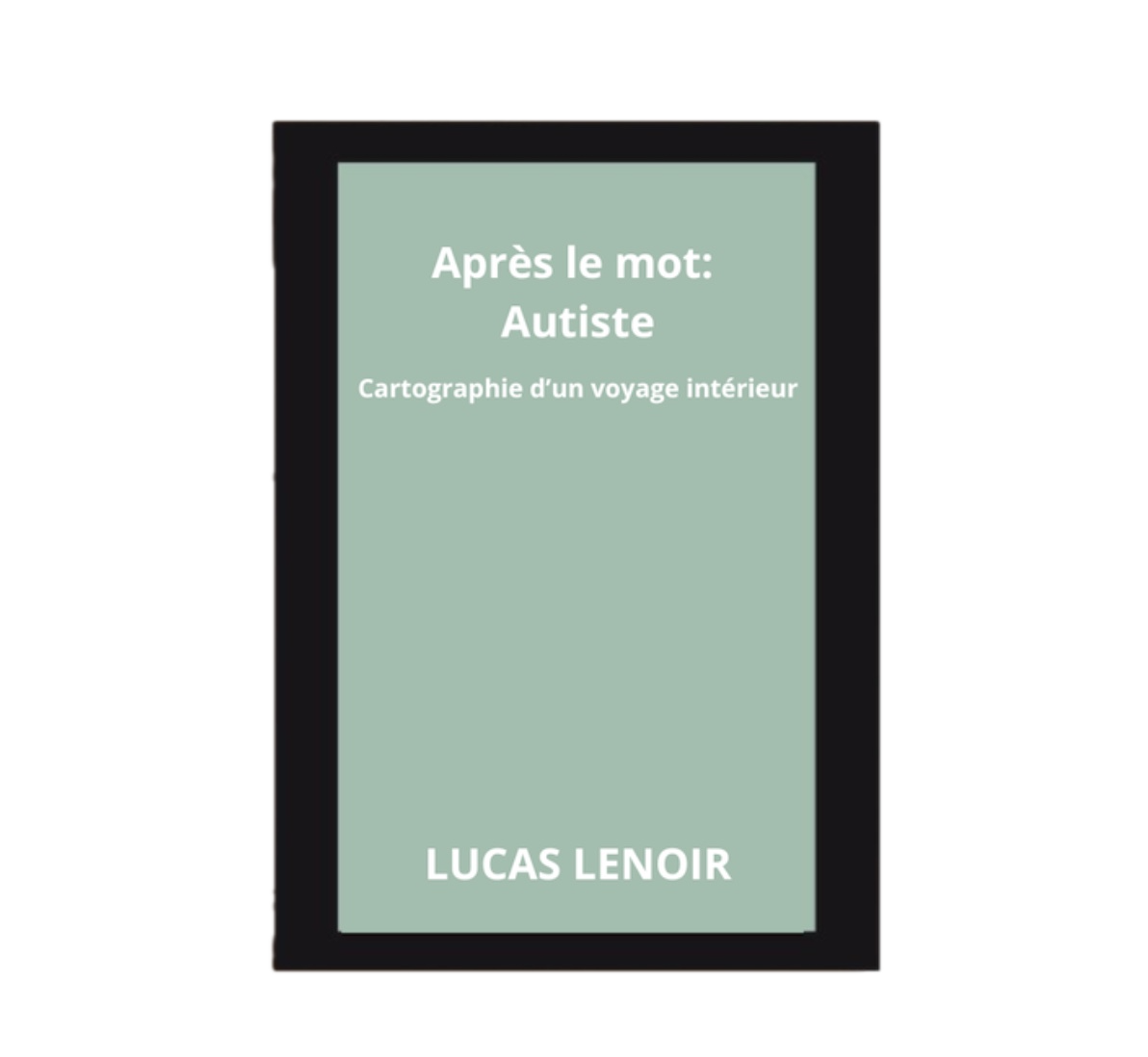
Après le mot : Autiste

This book is neither a manual nor a resilience story to celebrate.
It is a crossing. The one that begins after a word: autistic.
Not to explain, but to feel.
Not to convince, but to make visible what cannot be seen.
I write about masking, intensity, doubt.
About the shame we learn to swallow in order to look normal.
And about the moment you understand that it is not you who needs fixing,
but the way you look at yourself.
Après le mot : autiste is an inner map,
made of ruptures, returns to oneself, and words we wish we had heard sooner.
It is a book for those who feel alone in a crowded room,
and for those who want to learn to look differently.
“It will not change the world.Available on Amazon
But it might change a way of looking.
And sometimes, that is enough.”
Let's create a space where everyone can contribute.
Keynote, training or tailored programme: every session is designed around your context, your teams and your objectives.
Book an event